When people think about packing their vehicle, they usually fall into one of two categories.
They either throw absolutely nothing in the back and hope they'll never need anything, or they try to prepare for every imaginable disaster until the trunk is so full they can barely fit a bag of groceries. Like most things in life, I think the best answer is somewhere in the middle.
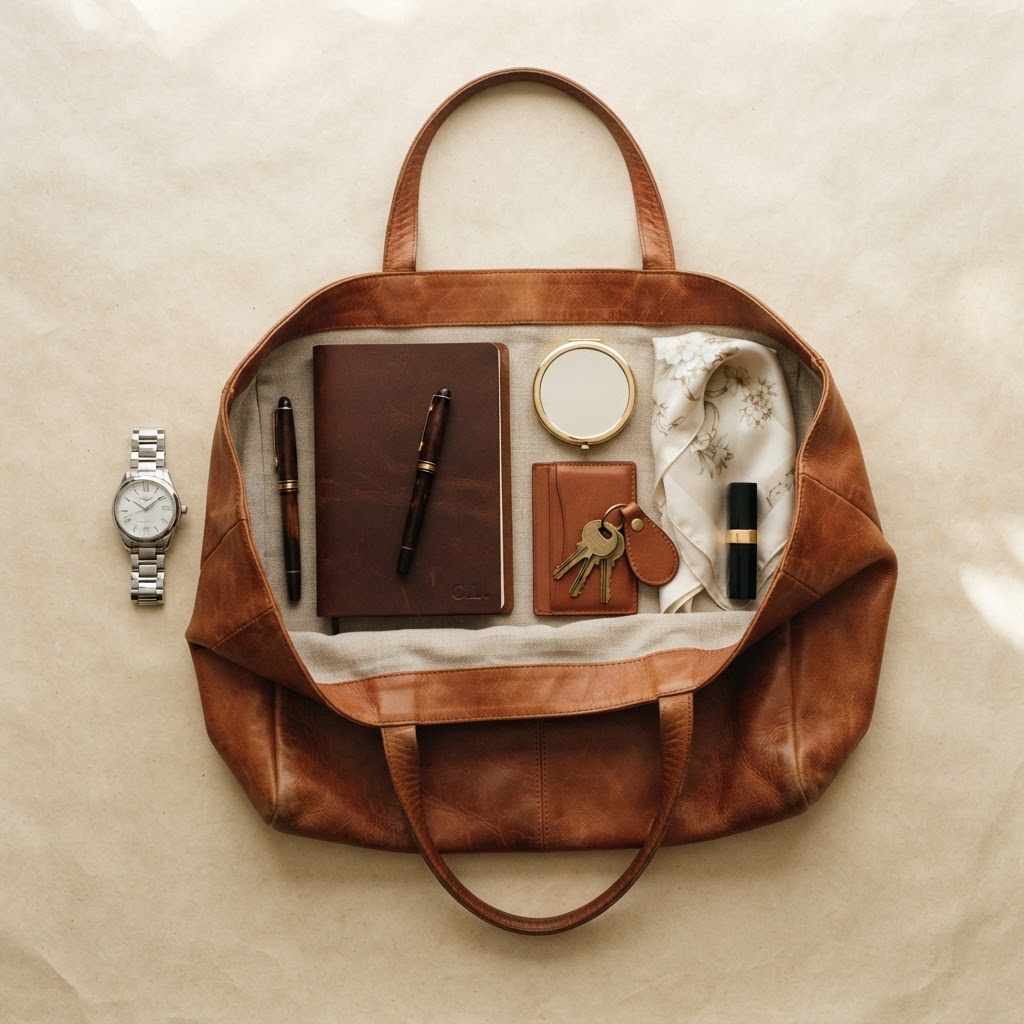
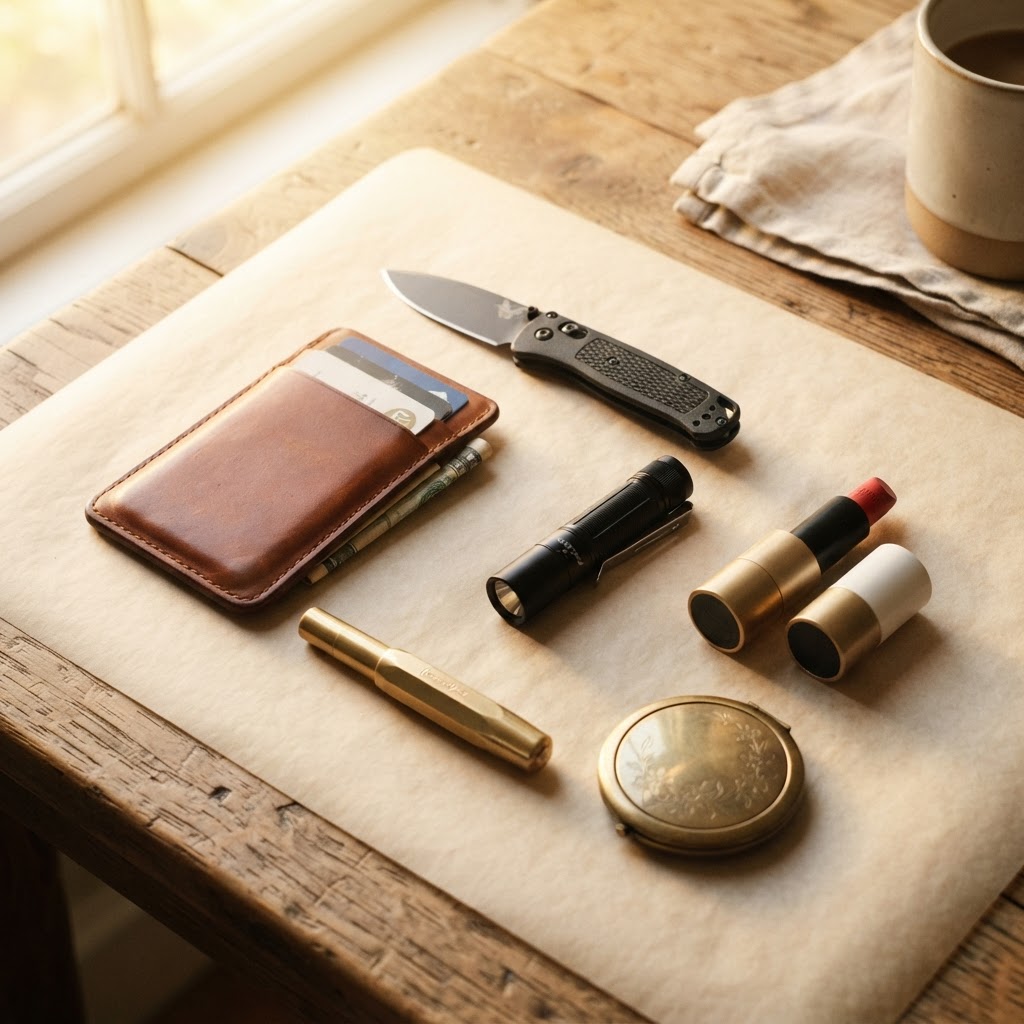
Your vehicle should be an extension of your everyday carry.
It should quietly support your life without becoming another place where clutter accumulates. Everything you keep in your car should have a purpose, and just as importantly, it should have a place. If you can't find something when you need it, then it doesn't really matter that you packed it in the first place.
One question I always ask myself is, "Would I realistically use this?" It's the same philosophy I use for my everyday carry, my home, and just about everything I purchase. There are plenty of impressive vehicle setups online filled with expensive recovery gear, camping equipment, and tools for situations that most of us will never encounter. While those setups certainly have their place, they don't reflect how the majority of us actually live. Most days we're driving to work, picking up groceries, taking our children to school, heading to the office, or meeting friends for dinner. Our vehicles should be prepared for the situations we're actually likely to face.
"If you had five minutes to walk out the door, would you have what you need?"
One mindset my husband has challenged our family to adopt is surprisingly simple. It isn't about expecting disaster or living in fear. It's about thinking ahead before you actually need to. That one question has changed the way we organize our home, the way we pack our vehicles, and even how we think about our everyday carry.
When you look at your vehicle through that lens, you begin to realize that preparation isn't about having everything. It's about having the right things. If you suddenly had to leave because of a family emergency, an unexpected overnight stay, a flat tire on the side of the road, or any number of life's little surprises, would your vehicle already have the basics covered? Could you grab your keys and simply go, or would you spend those precious five minutes searching for a charger, a flashlight, a jacket, or a change of clothes?
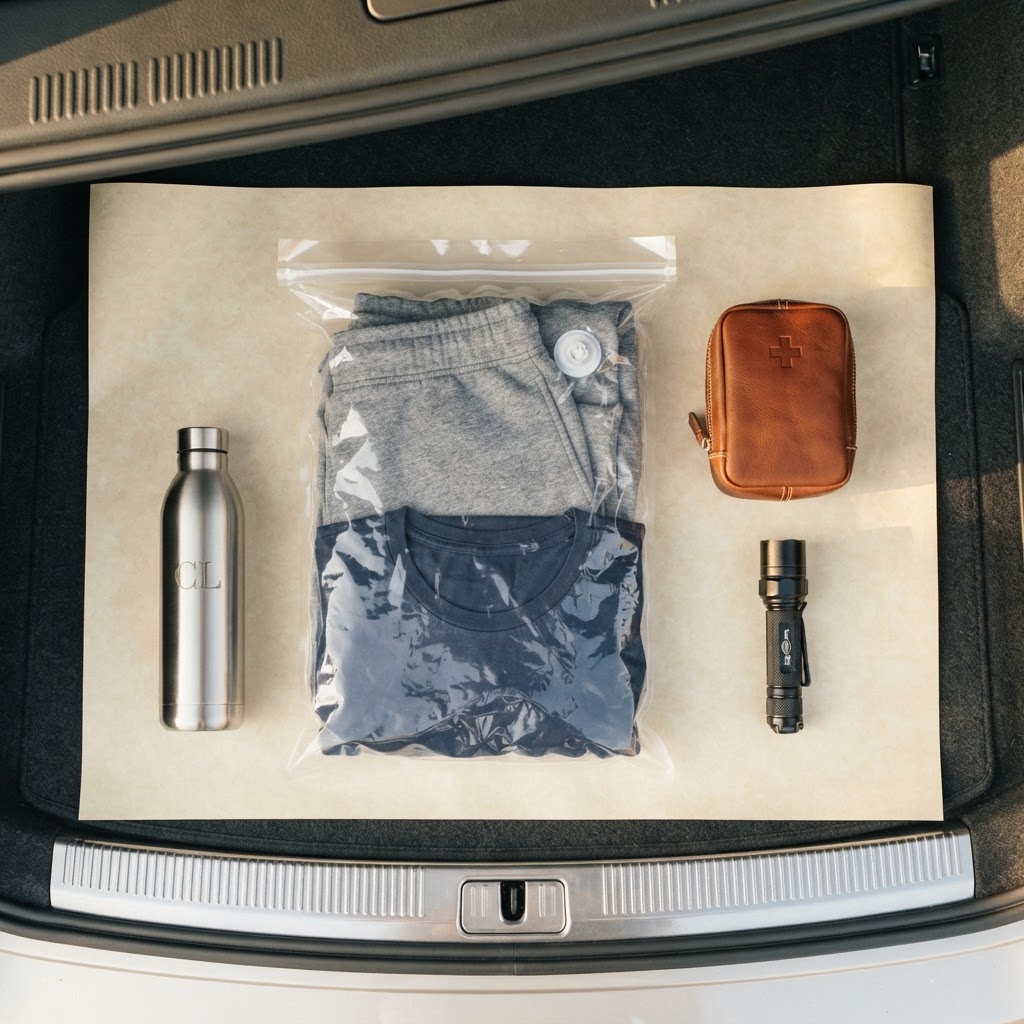
That question is one of the reasons I always keep an extra set of clothes in my vehicle. Not because I'm expecting some dramatic emergency, but because life has a funny way of interrupting your plans. If I have a flat tire while wearing nice jeans and a blouse, I'd much rather throw on an old pair of sweatpants and a t-shirt than crawl around on the side of the road worrying about ruining my clothes. Those old sweats have already served their purpose simply by giving me the freedom to handle the situation without a second thought.
To keep them from taking up valuable space, I vacuum seal the clothes into a storage bag. It compresses everything down to a fraction of its original size while keeping them clean and dry. More importantly, it allows me to keep the back of my vehicle clean and open for the things I actually use every week, like groceries, shopping bags, or whatever else needs to come home with me. I don't want my cargo area to become a permanent storage locker full of "just in case" items that constantly have to be moved around.
Along with the spare clothes, I keep a small first aid kit and a quality flashlight. Notice I said small. My goal isn't to build an ambulance in the back of my SUV. It's to have the supplies that solve everyday problems. Minor cuts, headaches, scraped knees, or needing a flashlight after dark are far more common than the emergencies we often see portrayed online. Build your kit around your level of training and your actual lifestyle, not around someone else's packing list.
Water is another item I think is worth keeping in your vehicle, but it also requires a little common sense. Remember that your car experiences the same extreme temperatures that you do. In the middle of summer, a parked vehicle can become incredibly hot, while winter temperatures can freeze bottles solid. If you choose to keep water in your vehicle, make it a habit to rotate it regularly or simply bring it inside when temperatures become extreme. It's a small task that helps ensure the water is still usable when you actually need it.
Over time I've realized that being prepared has very little to do with owning more things. It has everything to do with having a system.
Every item has a designated place, and after a while you stop thinking about where something is because you already know. You aren't digging through piles of bags looking for a flashlight or wondering where your medical kit ended up. Your vehicle stays organized, your cargo space stays functional, and your preparation becomes effortless because the system is already in place.
That, to me, is what preparedness should look like. It isn't loud. It isn't excessive. It isn't about filling every inch of your vehicle with expensive gear you'll probably never use. It's about quietly thinking ahead, making intentional choices, and building a system that supports the life you actually live.
At the end of the day, your vehicle should work for you, not against you. Every item should earn its place, every item should have a home, and every item should serve a purpose.
When you build your vehicle around that philosophy, you're not just packing a car—you're creating another layer of quiet confidence that follows you wherever the road leads.
Intentional Space. Quiet Readiness.
— The Covert Lady