People often ask how I always seem calm or how I rarely appear to be rushing from one thing to the next. The truth is, I'm not naturally unhurried. I simply spend time preparing before I need something. The calm people see isn't luck or personality—it's the result of small, intentional systems I've built over time.
One of the biggest habits that has changed my week is planning ahead. By Thursday, I already have the following week mapped out. I know what appointments I have, any projects that need extra attention, and anything out of the ordinary that I need to follow up on. My husband and I usually know our weekend plans before the current week is over. Of course, life changes and we adjust, but having a plan makes it much easier to pivot than starting every Monday wondering what comes next.
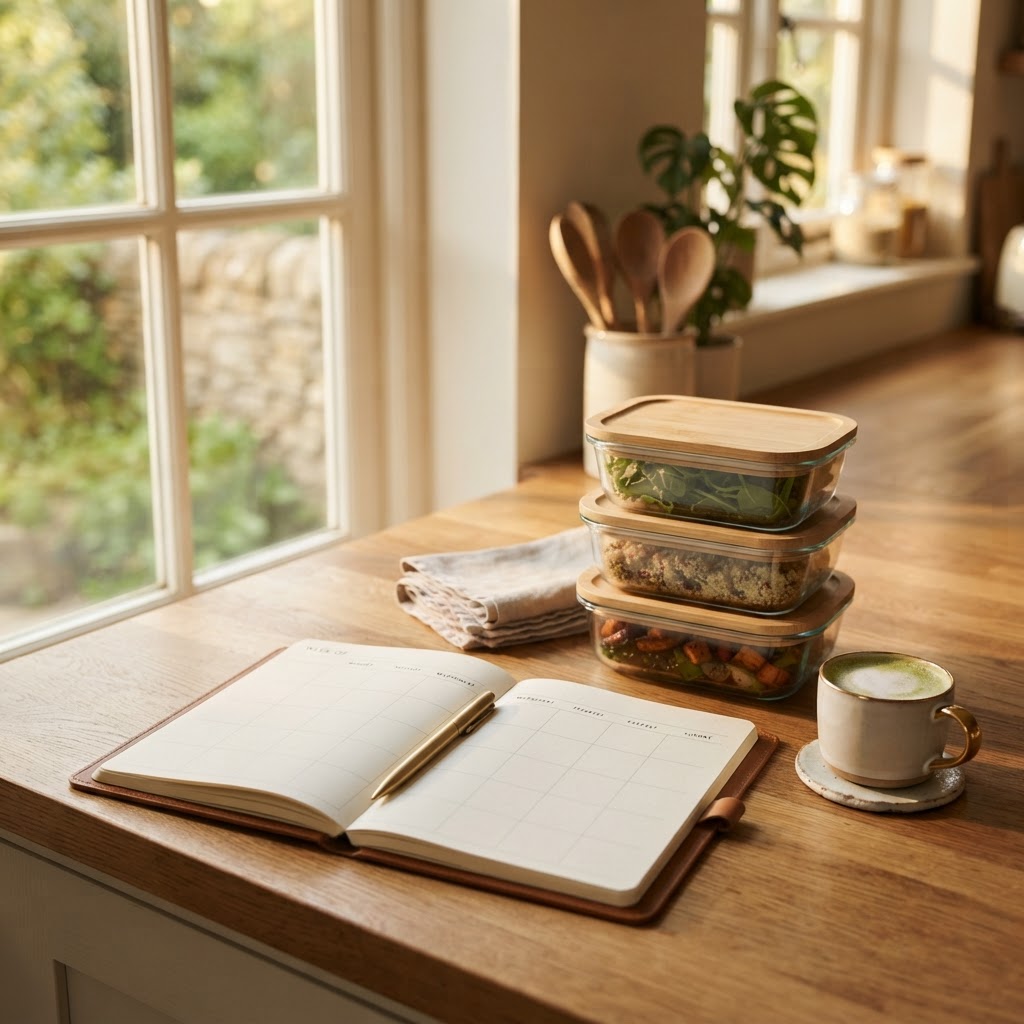
That same mindset extends into our kitchen. Every Sunday I meal prep and make a plan for when I'll cook throughout the week. Because of that, my lunches are already made before I ever leave for work. I'm not scrambling to figure out what to eat at noon, and I'm certainly not spending money on food delivery because I failed to plan ahead. I see so many people spending hundreds of dollars each month on takeout simply because they didn't have a plan.
Meal prepping isn't just about eating healthier—it's about buying back your time, protecting your budget, and removing one more decision from an already busy day.
Our home runs the same way. My husband and I work as a team and naturally divide responsibilities based on what works best for us. He usually washes and dries the laundry while I fold it and put it away. He does most of the cooking, and I clean the kitchen afterward. We don't keep score—we simply work together so no one person carries the entire load.
We're also teaching these habits to our daughter. She has her own trash can in her room that she can empty herself, and we're helping her learn to put her toys away and take responsibility for her own space. These aren't just chores; they're life skills. She's learning that taking care of your environment today makes tomorrow a little easier.
Before I go to bed each night, I spend just a few minutes walking through the house. I straighten anything that's been left out, make sure everything is back where it belongs, and start the dishwasher. Waking up to a clean kitchen changes the entire tone of the morning. Instead of beginning the day by dealing with yesterday's mess, we get to start fresh.
One of the simplest systems we have is that everything in our home has a place. When we're finished using something, it goes back where it belongs. We're not wasting ten minutes searching for keys, scissors, a flashlight, tape measure, or important documents because we've already decided where those things live.
Every time you stop to ask, "Where did I put that?" you're spending mental energy on a problem that didn't need to exist.
Giving everything a designated home removes hundreds of tiny decisions throughout the year and makes our home calmer and more functional.
That philosophy carries into my workspace as well. I keep my desk organized, file emails every day, and perform a monthly reset to make sure my systems are still working. When I need information from two or three years ago, I can usually find it within minutes because I put in the effort on the front end instead of letting things pile up.
I would much rather spend a few minutes maintaining a system than hours trying to recover from disorder.
I've also found that the little things matter. If a task takes less than a minute or two, I try to do it then instead of setting it down for later. Hanging up a jacket, filing a paper, putting something back where it belongs—those small actions prevent piles from becoming projects.
Many people think they're constantly busy when, in reality, they're constantly catching up.
Preparation also means leaving room to breathe. I don't try to schedule every minute of every day because life doesn't work that way. Appointments run long, traffic happens, children get sick, and plans change. Having margin in your schedule means one unexpected event doesn't throw your entire week into chaos.
Sometimes the most productive thing you can do is simply leave yourself enough space to adapt.
The same mindset even applies when I drive. My husband taught me to look several cars ahead instead of focusing only on the vehicle directly in front of me. Seeing what's developing farther down the road allows me to react earlier, drive more smoothly, and avoid unnecessary surprises. It's the same principle I try to apply to life: don't just react to what's immediately in front of you—anticipate what comes next.
One question my husband often asks our family is, "Could we be out the door in five minutes if we needed to?" That simple question has shaped how we think. We don't prepare because we expect something bad to happen. We prepare because it removes unnecessary stress from everyday life.
Perhaps the greatest benefit of all these systems isn't efficiency—it's presence.
Because so many of the small decisions have already been made, I can be fully present with my husband, my daughter, my friends, and my work. I'm not constantly distracted by things I forgot to do or tasks that have piled up waiting for me.
People often think I spend a lot of time preparing. The truth is, I spend a little time preparing so I don't spend a lot of time recovering. Our home isn't organized because we're obsessed with perfection. It's organized because good systems create freedom. Every meal I've planned, every list I've written, every email I've filed, and every habit I've built has given me something far more valuable than a few saved minutes. It has given me peace of mind.
In a world that constantly feels rushed, I believe one of life's greatest luxuries is having enough margin to slow down, enjoy the people you love, and respond thoughtfully instead of reacting frantically.
Preparation isn't about controlling life. It's about creating enough space to truly live it.
The Luxury of Margin
— The Covert Lady