There is more to you than the wars you lose.
Everyone makes mistakes. Everyone misjudges a situation, chooses the wrong direction, or experiences something that knocks them completely off course. At some point, everybody crashes along the way.
Sometimes the disruption comes from unexpected news that changes the entire week. Other times, it comes from a decision we made ourselves. Either way, the plan we carefully created no longer fits the reality in front of us.
I believe in planning ahead. I like knowing what needs to be done, where I need to be, and what the week is supposed to look like. Having a plan gives me direction and allows me to focus my energy instead of constantly reacting.
But planning ahead does not guarantee that life will cooperate.
When something upsetting happens, I allow myself time to feel it. Quiet confidence does not mean being unaffected, and strength does not require pretending everything is fine.
You may feel disappointed, embarrassed, angry, afraid, or simply exhausted. You may need to sit quietly before you can make sense of what happened. Some moments deserve that pause.
Feeling the weight of something does not make you weak. It makes you honest.
The key is allowing yourself to feel without allowing that moment to become your permanent identity. You can acknowledge that something hurt, admit that you made a mistake, or accept that the outcome was not what you wanted without deciding that it defines everything you are.
One loss does not erase every good decision you have made. One mistake does not cancel your integrity, intelligence, or ability. One difficult season does not mean the rest of your story has already been written.
There is more to you than the wars you lose.
Eventually, the question becomes:
What is your next move?
That answer does not always need to come immediately.
A pivot should not be an emotional reaction made in the middle of panic. It is a deliberate decision made after you have allowed the first wave of emotion to settle, gathered the facts, and looked honestly at the situation.
Moving quickly can feel productive, but moving with intention matters more than moving first.
You look at the circumstances as they actually are—not as you wish they had been. What happened? What can be repaired? What needs to change? What is still within your control? What must be handled now, and what can wait?
If you made a mistake, you own it. You learn from it and make whatever corrections are possible.
Accountability does not require you to spend the rest of your life punishing yourself. It requires honesty, responsibility, and a willingness to make a better decision moving forward.
Then you pivot.
Pivoting is not pretending the loss never happened. It is not forcing a positive attitude before you are ready or rushing past the lessons hidden inside the disappointment.
It is accepting that the original plan no longer works and deciding what you are going to do with the reality in front of you.
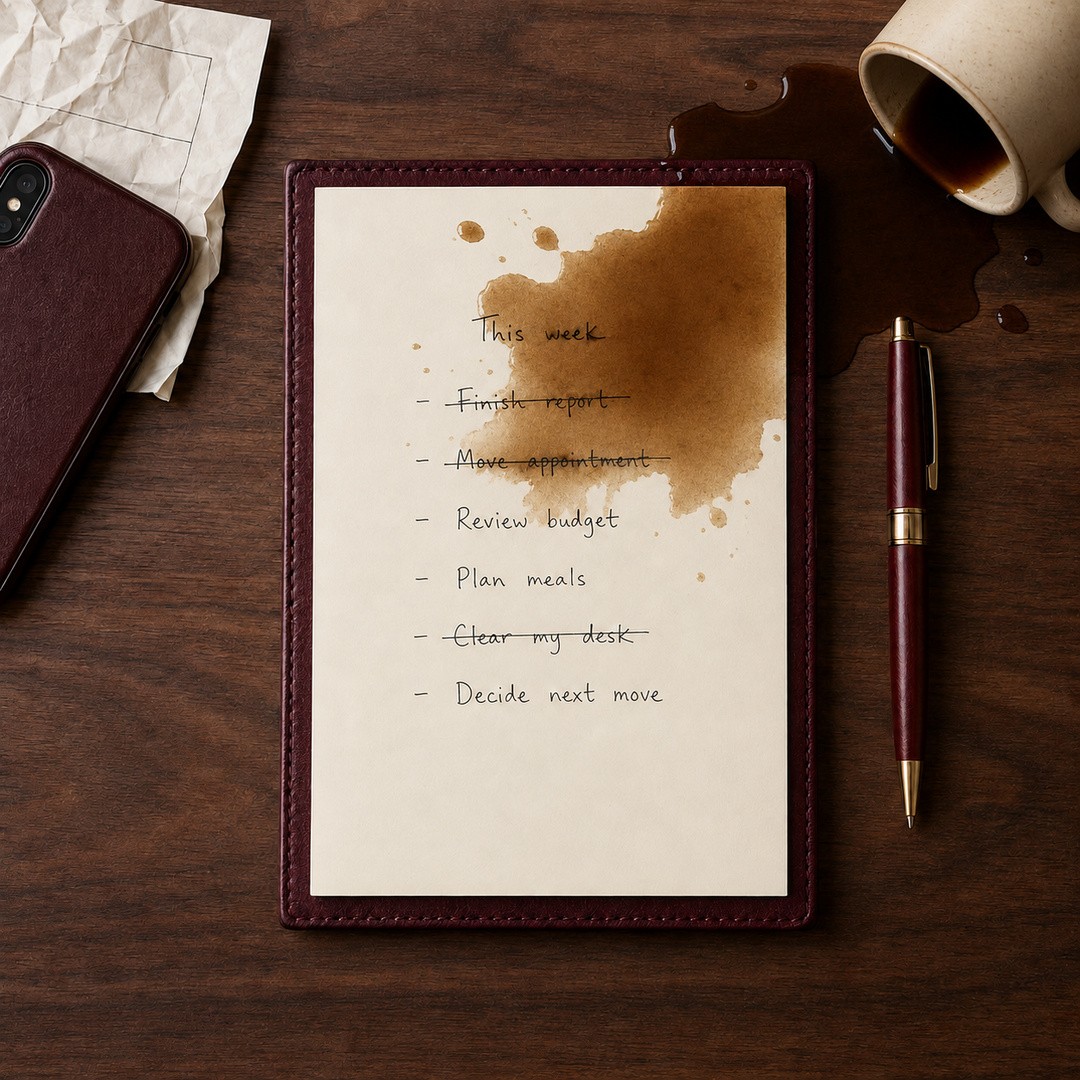
Sometimes that means making difficult phone calls, rearranging appointments, reworking a budget, changing direction, asking for help, or putting your nose to the grindstone and completing the next necessary task.
There is rarely anything glamorous about this part.
The next move may be small. It may simply be getting out of bed, answering one email, having one honest conversation, or writing down a new plan.
Progress does not always arrive through a dramatic comeback. Sometimes it begins with one quiet decision not to remain where you fell.
Not every loss needs to be recovered, either.
Sometimes the next move is not trying to recreate what you had. It may be accepting that a door has closed, releasing a plan that no longer fits, and building something entirely different.
We can spend so much energy trying to get back to the place we were before that we fail to consider whether we are supposed to return there at all.
A successful pivot may take you somewhere you never intended to go.
A disrupted plan does not have to become a completely chaotic life. One unexpected event may be outside of your control, but you can still prevent it from controlling every decision afterward.
That is one reason I value having systems in place. Systems cannot protect us from bad news, mistakes, or difficult circumstances. They give us something solid to stand on when life becomes uncertain.
Preparation is not about controlling every outcome. It is about creating enough margin to respond when the outcome changes.
Sometimes resetting means rewriting the entire week. Other times, it means reducing the plan to the few things that absolutely must happen.
The goal is no longer to complete everything exactly as intended. The goal becomes moving through the situation with your priorities intact and without creating additional chaos along the way.
There are also moments when the strongest next move is to slow down. Putting your nose to the grindstone does not always mean working harder. It can mean protecting your energy, accepting help, or giving yourself time to recover.
Strength is not measured by how much pain you can ignore. It is shown in your ability to recognize what the moment requires and respond with intention.
Every time you do this, you rebuild trust in yourself.
Not because you will always get everything right, but because you begin to understand that you are capable of correcting your course when you do not.
Self-trust is not believing you will never make another mistake. It is knowing that a wrong decision does not leave you permanently lost. You can stop, reassess, and choose differently.
A reset does not have to wait until Sunday. You can reset on a Tuesday afternoon, in the middle of a workday, or five minutes after receiving news you never expected. You can reassess and begin again as many times as necessary.
You may have crashed, but you do not have to stay there.
Feel what you need to feel. Be honest about what happened. Take responsibility for what belongs to you and release what does not.
Then lift your head, look at what remains, and ask yourself:
What is my next move?
The original plan may be gone, but you are not without direction.
Confidence does not come from never falling. It comes from knowing that when you do, you are capable of recovering, pivoting, and finding your way forward.
Make Your Next Move
— The Covert Lady