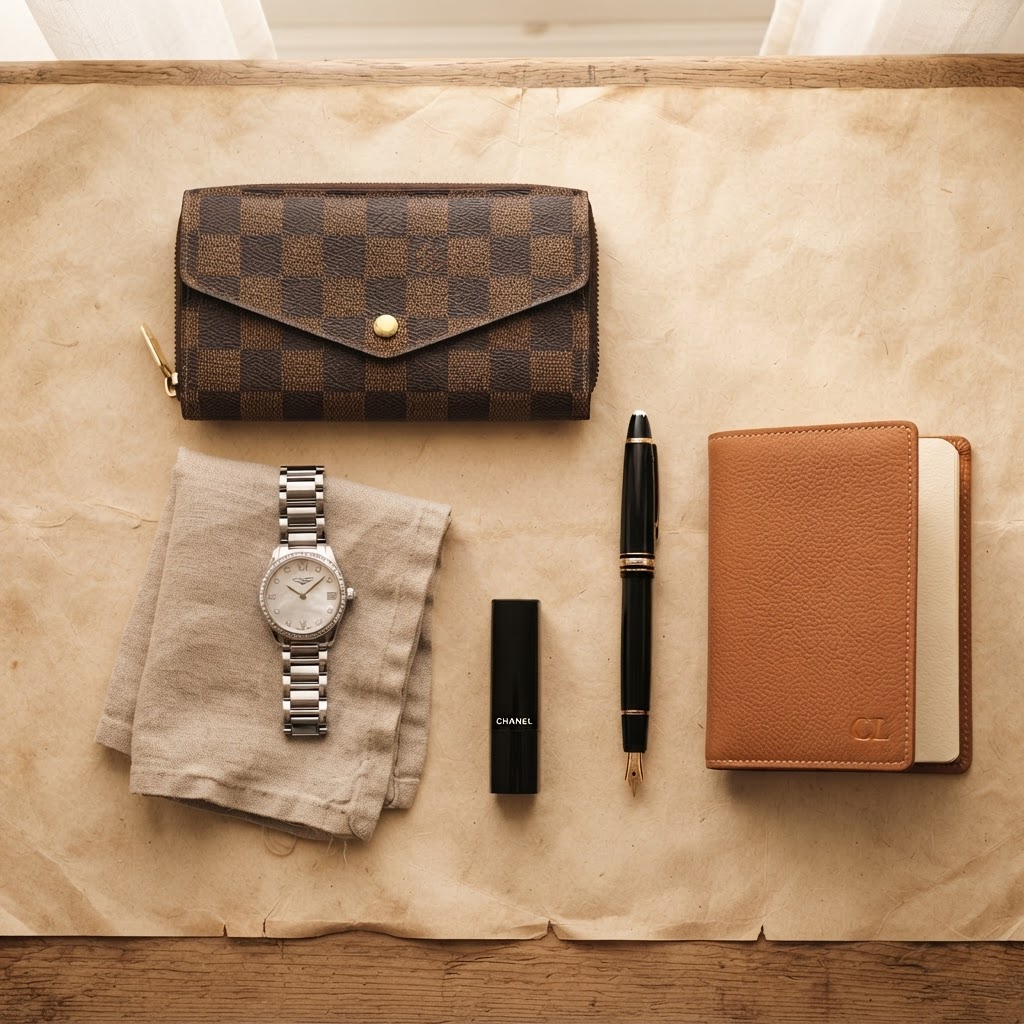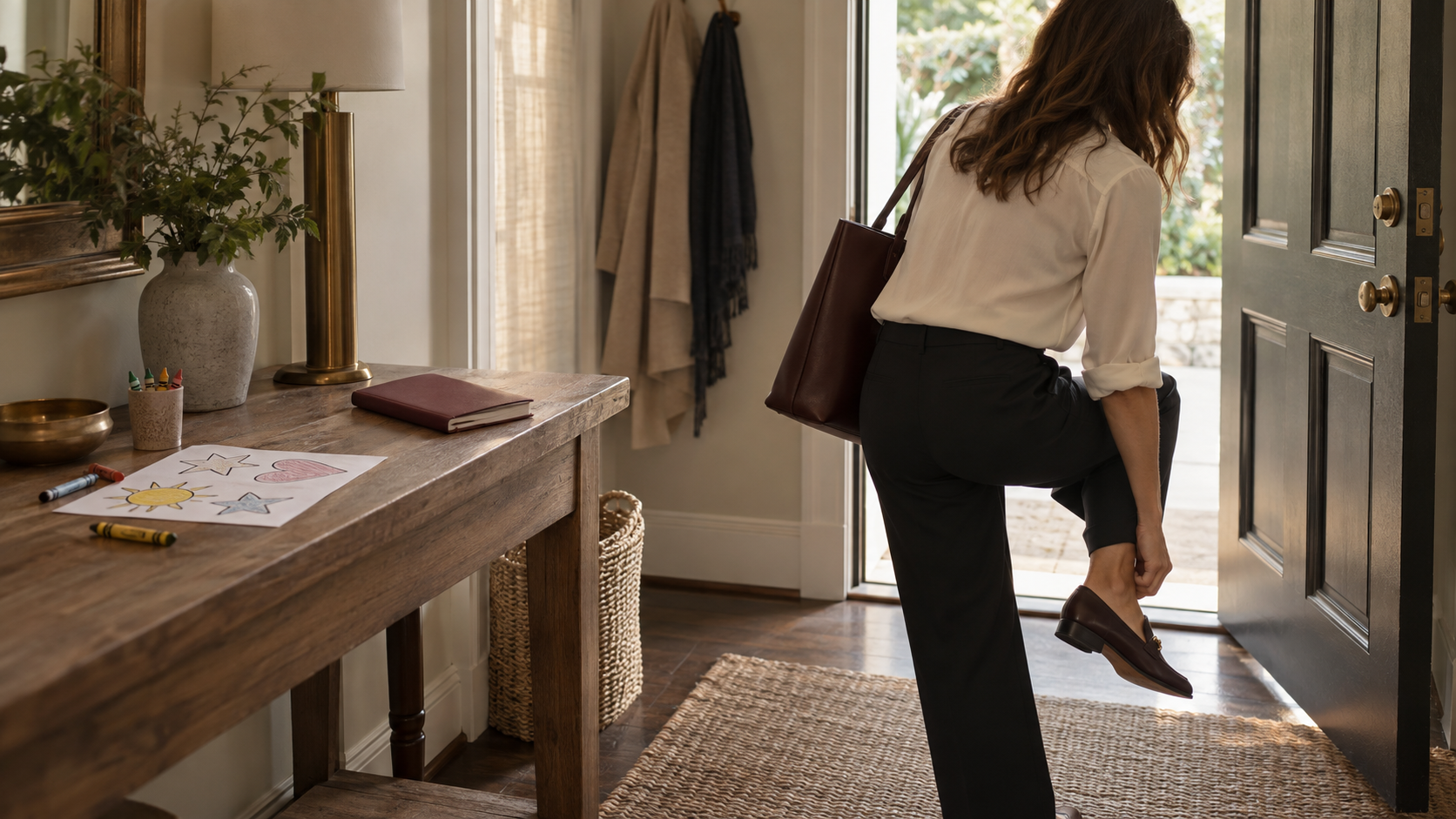
There was a time when the way we entered the world carried a little more intention. People dressed for the day. They dressed for travel, dinner, school, work, and the occasion in front of them. A flight once called for suits, ties, dresses, and polished shoes. Not because every traveler was wealthy or trying to impress the person in the next seat, but because going somewhere felt worthy of preparation.
I have always admired the Italian idea of getting dressed each day with intention. It is not necessarily about designer labels or displaying wealth. It is about drawing a boundary between rest and responsibility, between the privacy of home and the life waiting beyond the front door. Getting dressed becomes a quiet declaration that the day has begun and that you are prepared to participate in it.
Dressing with intention does not require expensive clothing, a large wardrobe, or formality for its own sake. It simply means recognizing that leaving the privacy of home once called for a small act of preparation.
The standard was not perfection. It was consideration.
Now I see children wearing literal pajama pants to school as ordinary daily clothing, not because it is spirit week or a designated pajama day. The pants themselves are not the real issue, and this is not a judgment about cost or style. What catches my attention is the disappearance of distinction. There is no longer a clear line between how we prepare for bed and how we prepare to learn. When every environment is treated like the living room, our posture toward those environments begins to change.
That loss of distinction extends far beyond clothing. We no longer seem to agree that different spaces, relationships, and occasions require different versions of our behavior. Everything has become casual, including the way we address one another, the familiarity we assume, and the things we believe we have permission to say.
Older forms of etiquette created visible boundaries around public interaction. When couples spoke in social settings, customs often guided how people addressed one another and how much familiarity was appropriate. Not every one of those customs deserves to be restored. Some traditions ignored women, spoke for them, or confused politeness with obedience. The past was not automatically more gracious simply because it was more formal.
Some boundaries needed to be challenged. But removing an outdated boundary should have required us to replace it with something more thoughtful, not abandon the idea of restraint altogether. We seem to have mistaken the absence of rules for freedom, even when that freedom leaves someone else carrying the discomfort.
We once visited a luxury designer store where every associate acknowledged us, yet each assured us that someone else would help. I understand that associates may have departments or sections they are expected to cover, but no one ever took responsibility for helping us. Eventually, we left.
When we returned another time, a male associate was kind, attentive, and helpful. Then, at the end of the purchase, he attempted to hug me. It was unexpected and awkward. Neither experience found the appropriate middle. One lacked ownership, while the other assumed familiarity.
Professionalism is not coldness, but warmth does not require assumed familiarity.
Courtesy should make another person feel acknowledged and comfortable. It should not leave them feeling invisible, nor should it cross into a level of personal contact they did not invite. Personal freedom without personal restraint often becomes someone else's discomfort.
By contrast, one of the things I loved most when we toured our daughter's school was that the tour was not performed for us as parents. We were the adults making the final decision, but the staff spoke directly to our daughter. They showed her the classrooms, explained the facilities to her, and helped her imagine herself there.
They understood that while the enrollment decision belonged to us, the experience would belong to her. Their boundary was not about excluding the parents. It was about recognizing who the school was actually there to serve. They made our daughter feel seen, respected, and welcome, and that made me trust them more than a polished presentation directed only at the people holding the checkbook ever could.
Good boundaries do not make people feel smaller. They remind us whose voice should matter in the moment.
The same principle applies to the way we speak. It has become common to say things to one another that people once would have been embarrassed to say aloud. Cruelty is excused as honesty. Inappropriate questions are called curiosity. Disrespect is passed off as humor. People comment on another person's body, marriage, parenting, beliefs, finances, or private decisions as though access to someone creates entitlement to every part of that person's life.
Not every thought needs to be spoken. Not every opinion requires an audience. Restraint is not dishonesty, and tact is not weakness. We can tell the truth without treating another person's dignity as collateral damage. We can disagree without humiliating. We can be familiar without becoming intrusive. We can be warm without assuming access that has not been offered.
This is where boundaries are often misunderstood. A boundary is not always a wall meant to keep people out. Sometimes it is simply the line that helps us understand where our responsibility ends and another person's dignity begins. It tells us what the moment requires, whose needs should be centered, and when our comfort is not the only consideration.
My daughter recently brought home a picture from school to color. The shapes were outlined with thick lines, giving her a clear space in which to work as she learned to stay within the boundaries. It was such a simple assignment, yet it made me think about what we are meant to teach children.
We give children boundaries because they are still learning how to move through the world. We teach them where the lines are, why they matter, and how their choices affect the people around them. Then, somewhere along the way, adults begin treating boundaries as though they are merely limitations to overcome.
As parents, family members, bosses, coworkers, and mentors, we are responsible for modeling something better. We teach the next generation through the way we dress for an occasion, speak to other people, respect personal space, honor professional roles, and recognize when a moment belongs to someone else. Children learn civility by watching how the adults around them practice it.
Civility does not sustain itself.
Manners do not pass naturally from one generation to the next without being demonstrated. A healthy society requires more than people simply existing beside one another. It requires people who understand that their choices ripple into the lives of others.
Perhaps boundaries were never meant to make life stiff or performative. Perhaps they were there to remind us that comfort is not the only thing worth considering. The way we dress, speak, and behave tells the people around us whether we believe the moment matters.
Somewhere along the way, we gained permission to be casual everywhere. I wonder what we lost when we stopped believing anything deserved our best.
The lines around us are not always meant to divide us. Sometimes they are what allow us to live together with intention, dignity, and respect. They are what make a society more than people merely coexisting in the same space.
The Lines That Hold Us
— The Covert Lady