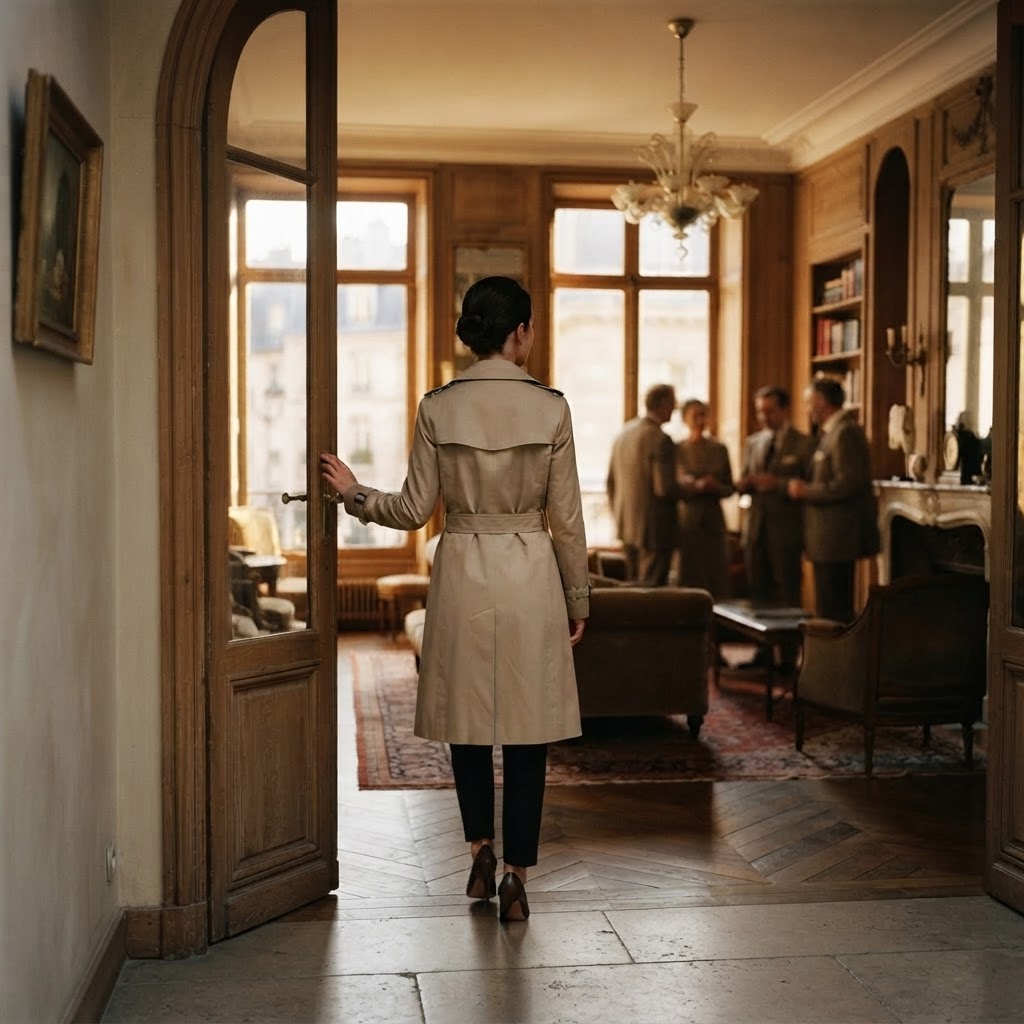
Have you ever noticed that two people can experience the exact same moment and walk away with completely different perspectives? One notices every detail while another remembers only the bigger picture. One person immediately begins solving the problem, while another is thinking about how everyone involved is feeling. Neither perspective is inherently better than the other. We simply experience the world through different lenses.
I've always found personality assessments, like the Myers-Briggs Type Indicator, interesting—not because I believe they can perfectly define a person, but because they encourage us to ask better questions about ourselves and the people around us. They're a starting point for self-awareness, not a label that determines who we are.
I personally have become more introverted as I've gotten older. Growing up as an only child in a quiet household, silence was normal to me. My world was small, familiar, and predictable. Looking back, I realize my perception of "normal" had already been formed long before I ever stepped onto a college campus.
Then everything changed.
I left my small hometown for college, where there were literally more people on campus than lived in my entire county. Overnight, my world went from quiet roads and familiar faces to crowded sidewalks, packed classrooms, and constant noise. What had once felt comfortable suddenly felt overwhelming. I began to see the world as much louder, faster, and more chaotic than I had ever experienced.
That shift changed me in ways I never expected. In high school, I was often the student who had the answer and wasn't afraid to raise my hand. By the time I reached college, I found myself hoping the professor wouldn't call on me. It wasn't because I didn't know the material. I simply didn't want to speak in front of a room full of people. The anxiety wasn't about being unprepared—it was about suddenly feeling like I was surrounded by hundreds of strangers in an environment that felt completely different from anything I had known.
Looking back, I don't think I became a different person. I think my lens changed. My experiences reshaped how I viewed the world and how I responded to it. Since then, other seasons of life have continued to shape that lens. Becoming a wife, becoming a mother, and working in the firearms industry have all changed the way I see people, responsibility, and the world around me. Our lens isn't fixed. It evolves as we do.
Working in the firearms industry has reinforced this lesson more than I ever expected. I've watched customers handle the exact same firearm and come away with completely different opinions. One person wants to know every technical specification. Another only cares about how it feels in their hand. Someone else is drawn to its appearance, while another focuses entirely on reliability. They're all looking at the same object through different lenses. None of them are necessarily wrong. They're simply evaluating it based on what matters most to them.
The same is true in our everyday relationships. Maybe your spouse doesn't notice the things that seem obvious to you. Maybe your coworker approaches a project in a way you would never consider. Maybe your child asks questions that leave you wondering how they arrived at that conclusion. Our first instinct is often to assume someone is being careless, stubborn, overly emotional, or difficult. More often than not, that's not the case at all. They're simply processing the situation differently because their lens has been shaped by experiences different from yours.
One of the greatest lessons I've learned is that when I begin to understand how someone else naturally functions, it changes the way I interact with them.
Instead of expecting them to think, communicate, or solve problems the way I do, I begin to appreciate that they're approaching the same situation from a different perspective.
That understanding doesn't mean we always agree, but it makes it much easier to meet in the middle. I become more patient with the questions they ask, the decisions they make, and even the things they notice—or don't notice. Instead of becoming frustrated, I become curious. I want to understand how they arrived at that conclusion because chances are, they're seeing something I haven't considered.
I've found that some of the strongest relationships—whether with a spouse, a friend, a coworker, or even a customer—aren't built because two people think exactly alike. They're built because each person is willing to understand how the other operates. When we stop trying to change someone's lens and instead learn to look through it for a moment, communication becomes easier, trust grows, and finding common ground feels much more natural.
This idea reaches far beyond personality assessments. Our lens is influenced by our families, our careers, the places we've lived, our successes, our failures, and the challenges we've overcome. Two people with the same personality type can still experience the world very differently because no two life stories are exactly the same.
One question I try to ask myself more often is, "What might I be missing?" It's a simple question, but it reminds me that my perspective is only one perspective. Sometimes the most respectful thing we can do isn't offer our opinion first—it's ask someone how they arrived at theirs.
For me, that's the greatest value of understanding personality and perspective. It's not about labels or proving who's right. It's about becoming more self-aware while extending more grace to the people around us. Being intentional isn't just about the gear we carry, the purchases we make, or the systems we build. It's also about being intentional in the way we understand people.
There is no correct or incorrect way to see the world. We each carry a different lens shaped by our personalities, experiences, and the lives we've lived. The goal isn't to decide whose perspective is right—it's to understand one another a little better.
When we choose understanding over assumption, we become better spouses, better parents, better coworkers, better leaders, and better friends. Different perspectives don't divide us—they strengthen us when we're willing to learn from one another.
Before you move on with your day, ask yourself one simple question:
What experiences have shaped the lens through which you see the world?
Your answer is unique to you. And so is everyone else's.
See Clearly
— The Covert Lady