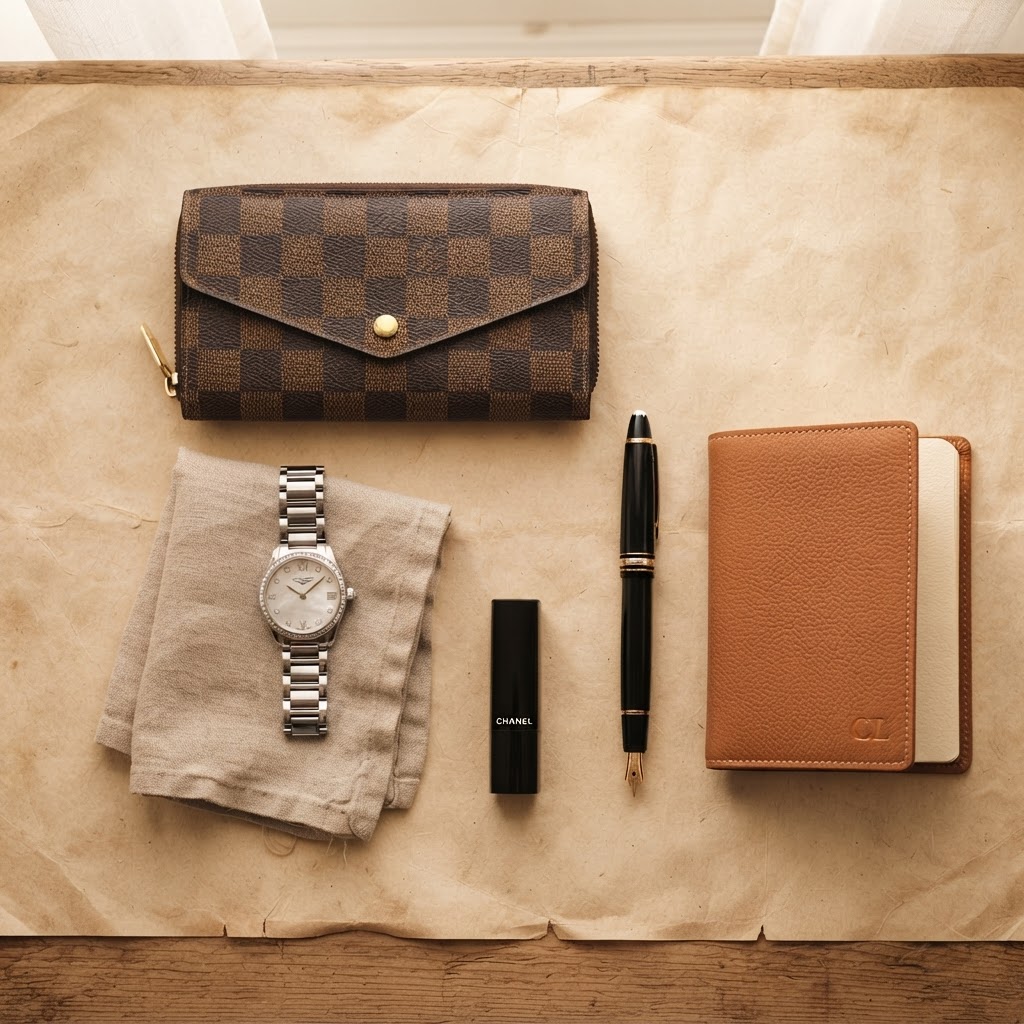
Most of us don't notice friction until we're frustrated by it.
It's the charger that somehow disappears every morning. The bag you have to dig through to find your keys. The groceries sliding across the back of the car. The flashlight you know you own but can't remember where you put it. None of these moments are significant by themselves, but together they quietly steal your time, attention, and energy.
I've started looking at these moments differently. Instead of accepting them as part of life, I ask a simple question:
Why did this create friction?
The answer usually isn't that I need another organizer or another gadget. More often than not, it's because the system isn't working.
We live in a time where the solution to every inconvenience seems to be another purchase. Social media has become incredibly good at convincing us that one more container, one more pouch, or one more "must-have" product will finally make life organized. Sometimes that's true. Most of the time, it simply adds another object without solving the reason the problem existed in the first place.
Before buying anything, I like to understand the problem. Is the item stored in the wrong place? Am I carrying things I never actually use? Does this fit the routine I have today, or am I organizing my life around habits I had years ago? Once you understand the source of the friction, the solution often becomes surprisingly simple.
One lesson I've learned is that the closest place isn't always the best place.
Sometimes we believe everything should be within arm's reach, but that often creates clutter instead of convenience. The better question isn't, "Where can I put this?" It's,
"Where does this naturally belong in my routine?"
Think about the path you take through your day. If your shoes always come off beside the garage door, that's probably where they belong. If you fill your coffee tumbler every morning before work, it makes more sense to keep it near the coffee maker than tucked away in a cabinet across the kitchen. If you empty your work bag in the same place every evening, that's where your charger should live.
The goal isn't to make every item available within three steps. It's to eliminate unnecessary movement. A few extra steps rarely matter if they're part of the natural flow of your day. What creates friction is having to stop, think, backtrack, or search because something isn't where your mind expects it to be.
I like to think of organization less as arranging belongings and more as designing a workflow. Every item should support the way you naturally move through your home, your vehicle, and your day. When things are intentionally placed, routines become almost effortless because your environment begins working with you instead of against you.
This mindset has completely changed the way I think about preparedness.
I don't believe every emergency item needs to sit on the kitchen counter or be within arm's reach. That usually creates more clutter than confidence. Instead, I ask,
If I needed this, could I get to it quickly without having to think?
A flashlight doesn't belong buried in a forgotten storage bin, but it also doesn't need to live in the middle of the dining room table. There is a balance between accessibility and practicality, and finding that balance removes friction instead of creating it.
The friction test extends beyond my own routines and into the habits we build as a family. One of the simplest examples is teaching my daughter to put her toys away when she's finished playing. On the surface, it looks like a lesson in responsibility and taking care of her belongings, and it certainly is. But there's another reason that matters just as much.
A home covered in clutter creates friction. It slows you down, distracts you, and in the moments that matter most, it becomes an obstacle. If someone is hurt, if the smoke alarm goes off in the middle of the night, or if we simply need to move quickly through the house, I don't want to be stepping over toys scattered across the floor. Keeping things picked up isn't about having a perfectly staged home. It's about creating an environment that supports your family instead of working against it.
Children don't always understand the "why" behind these routines, so it's our responsibility to teach them. Putting toys away isn't just another chore. It's learning to respect the spaces we share, to make life easier for the next person, and to build habits that quietly prepare us for situations we hope never happen. Those small routines eventually become second nature, creating a home that feels calmer, functions better, and allows everyone to move through it with confidence.
The same principle applies everywhere else.
A work bag shouldn't require you to empty half its contents to find a pen. Your vehicle shouldn't become a storage unit filled with things you'll never realistically use. The items you carry should have a purpose, a place, and a reason for being there. Every unnecessary object demands space, attention, and maintenance. Sometimes the best way to improve a system isn't by adding something—it's by removing what no longer belongs.
That's why I rarely ask whether something is popular or trending. I ask whether it removes a real point of friction from my life. Does it make a routine smoother? Does it solve a recurring problem? Will I actually use it? If the answer is no, it probably doesn't deserve a place in my system.
Not every kind of friction should disappear. Some things are worth the effort. Learning a new skill, maintaining your equipment, practicing at the range, or developing discipline will always require work. That's productive friction because it builds capability. The kind of friction worth eliminating is the unnecessary kind—the clutter, inefficiencies, and poor systems that consume your attention without giving anything back.
The best systems are almost invisible.
You know where your things are without searching. You can leave the house without wondering what you forgot. Your bag supports your day instead of weighing it down. Your home feels calm because everything has a purpose and a place.
Quiet confidence isn't built through having more. It's built by thoughtfully refining the systems you rely on every day. The friction test is simply the practice of paying attention to what slows you down, asking why it happens, and making small adjustments until your environment begins working with you instead of against you.
In the end, preparedness isn't always about having the newest gear or the most equipment. More often, it's about creating a life with so little unnecessary friction that when the unexpected happens, you're free to focus on what truly matters.
Design Systems. Eliminate Friction.
— The Covert Lady